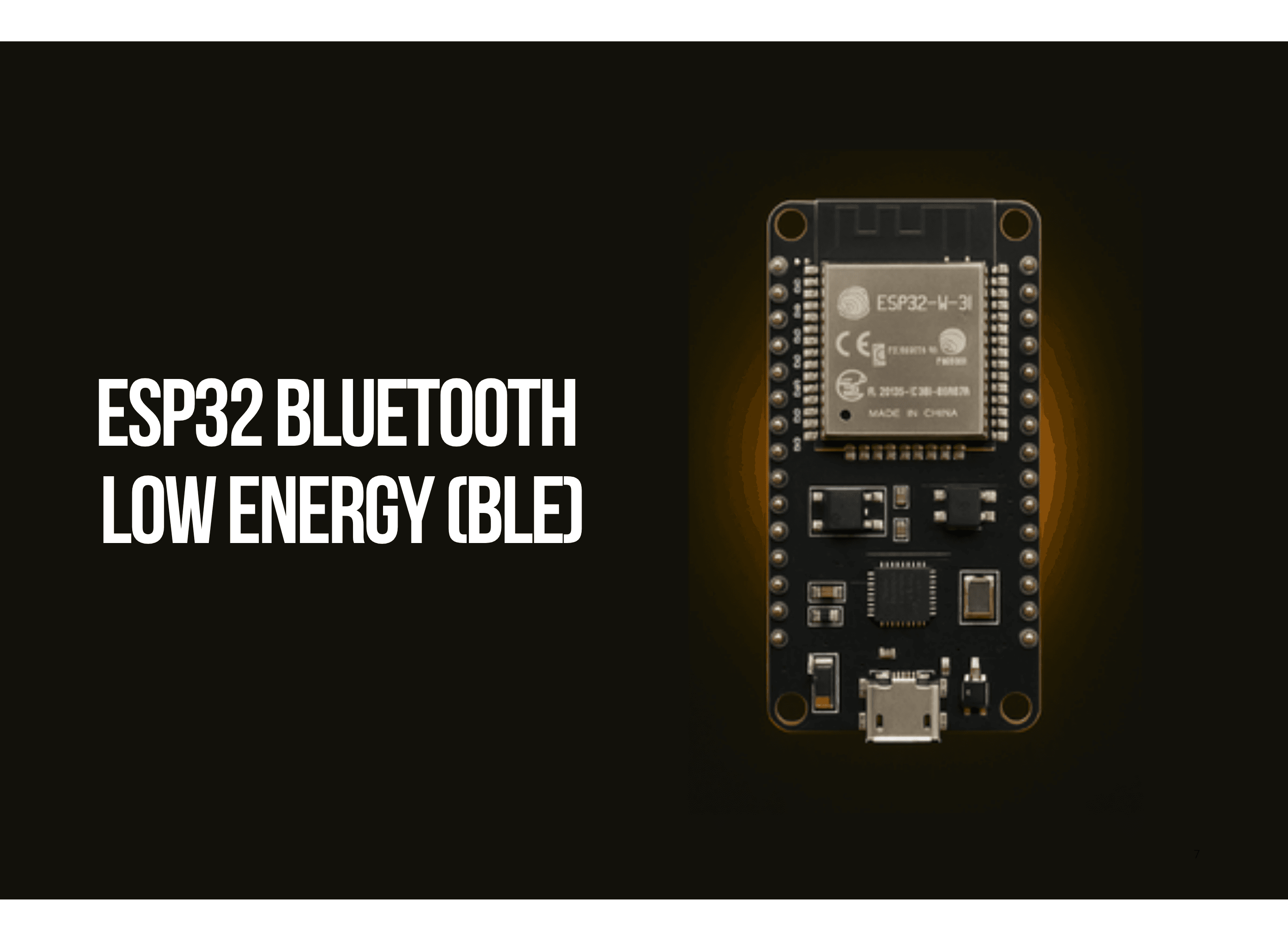
ESP32 Bluetooth Low Energy (BLE)
## Introduction The ESP32 microcontroller, equipped with Bluetooth Low Energy (BLE) capabilities, has become a preferred choice for developers creating low-power and high-efficiency wireless communication solutions. BLE allows the ESP32 to connect seamlessly with smartphones, wearables, and IoT devi
#Introduction
The ESP32 microcontroller, equipped with Bluetooth Low Energy (BLE) capabilities, has become a preferred choice for developers creating low-power and high-efficiency wireless communication solutions. BLE allows the ESP32 to connect seamlessly with smartphones, wearables, and IoT devices, offering innovative applications across various domains.
#What is Bluetooth Low Energy (BLE)?
Bluetooth Low Energy (BLE) is a wireless communication protocol introduced with the Bluetooth 4.0 specification. Unlike Classic Bluetooth, BLE is designed for low-power, short-range communication, making it ideal for applications like smart sensors, health monitors, and connected appliances. BLE is efficient, secure, and highly compatible with modern devices.
#Why Use ESP32 for BLE?
The ESP32 microcontroller by Espressif Systems is known for its dual-core processor, built-in Wi-Fi, and BLE capabilities. Here are key reasons to choose ESP32 for BLE applications:
- Low-Power Design: The ESP32’s deep sleep modes paired with BLE minimize energy consumption, extending battery life for portable devices.
- Dual-Mode Support: The ESP32 supports both BLE and Classic Bluetooth, offering flexibility for diverse projects.
- High Processing Power: Equipped with a 32-bit processor, the ESP32 handles complex BLE tasks efficiently.
- Extensive Libraries: Developers benefit from robust BLE libraries in the Arduino IDE and Espressif’s SDK.
#Features
- Energy Efficiency: Reduces power consumption for battery-operated devices.
- Multiple Roles: Can act as a central device (scanner) or peripheral (advertiser).
- Secure Connections: Features encryption and authentication for secure communication.
- Custom Services: Allows developers to create custom GATT (Generic Attribute Profile) services for specific use cases.
#Applications
- Health and Fitness: BLE powers wearable devices like fitness trackers, heart rate monitors, and smartwatches.
- Smart Home Automation: Enables communication between sensors, smart locks, and home assistants.
- Industrial IoT: Used in asset tracking, remote monitoring, and predictive maintenance.
- Retail: BLE beacons offer location-based services and personalized marketing.
- Gaming and Entertainment: Enhances user experience with wireless controllers and peripherals.
#How BLE Works
BLE communication on the ESP32 follows these key steps:
- Advertising: The ESP32 broadcasts its presence using small data packets.
- Scanning: Other devices detect and respond to these advertisements.
- Connection: A link is established for data exchange.
ESP32 supports the GATT protocol, enabling devices to define attributes and services for efficient communication.
#Sample Code: ESP32 BLE LED Control
#include "BluetoothSerial.h"
BluetoothSerial SerialBT; const int ledPin = 2; // LED connected to GPIO2
void setup() { Serial.begin(115200); SerialBT.begin("ESP32_BT_LED"); pinMode(ledPin, OUTPUT); Serial.println("Bluetooth Ready!"); }
void loop() { if (SerialBT.available()) { char command = SerialBT.read(); Serial.println(command);
[object Promise]}
This code demonstrates how to use the ESP32 to control an LED over BLE using commands sent from a smartphone or BLE-enabled device.
#Advantages of ESP32 BLE
- Scalability: Supports point-to-point and mesh networking for various applications.
- Cost-Effective: The ESP32 offers advanced features at an affordable price.
- Community Support: A vast developer community ensures continuous updates and resources.
#Challenges of BLE Development
While BLE is versatile, developers may face challenges such as:
- Limited Range: BLE operates within 10-50 meters, suitable for personal area networks.
- Low Data Throughput: Not ideal for high-bandwidth applications like video streaming.
- Interference: Shared 2.4 GHz frequency with Wi-Fi may cause occasional conflicts.